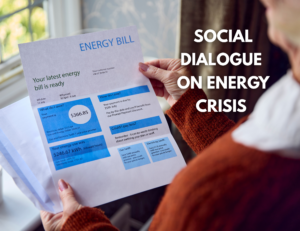
 Following the joint request submitted by Generation 2004 and U4U, DG HR organised a social dialogue meeting on the impact of the current geopolitical and energy situation on staff. We welcome the fact that DG HR chose to engage directly with staff representatives rather than simply replying in writing.
DG HR acknowledged the legitimacy of the discussion and confirmed that the situation is being closely monitored. While the administration considers it too early to launch financial support measures, it recognised that further action could be considered if the situation deteriorates or becomes more prolonged.
For Generation 2004, the key message remains clear: the institution should not wait until staff are already under severe financial pressure before acting. Prevention is better than reaction.
We underlined that the salary adjustment method is not designed as an emergency tool. It may compensate inflation retroactively, but it cannot fully respond to sudden shocks in fuel, heating, food or travel costs. Staff pay their bills now, not retroactively.
The discussion also showed broad convergence among staff representatives on one immediate and realistic solution: more flexibility.
Generation 2004 therefore argued for a flexibility package in the current exceptional circumstances. This should include increased teleworking flexibility, including broader use of teleworking from outside the place of employment, and more flexible organisation of presence in the office where service needs allow it.
This is also a matter of consistency. If the Commission encourages Member States and citizens to reduce energy consumption and unnecessary travel, it should also apply the same logic to its own staff. We cannot promote flexibility and sustainability externally while applying them too restrictively internally.
At the same time, flexibility alone cannot solve everything. Some colleagues cannot telework because their physical presence is required, including staff in laboratories, childcare and, proximity services and other site-specific functions. For these colleagues, commuting costs remain unavoidable. Any future package must therefore also consider targeted support for those who cannot reduce travel.
DG HR recalled existing measures, including the summer BEST action, building closures and the possibility of ad hoc arrangements with line managers. It also indicated that a stronger use of flexibility within the existing rules could be considered, including arrangements during the day to avoid peak commuting times.
This is a useful starting point, but it should now be translated into clear guidance to DGs and managers. Flexibility should not depend only on local goodwill or uneven managerial practices.
Generation 2004 also stressed that the impact is not the same for all colleagues. Lower-paid staff, single-parent families, long-distance commuters, and colleagues living outside expensive city centres are more exposed. For them, rising costs are not theoretical: they affect the monthly budget directly.
The administration indicated that it is preparing an inventory of the requests made by the OSPs and will report them to the hierarchy. It also confirmed that regular meetings may be organised to reassess the situation.
Generation 2004 will continue to insist on three priorities: monitoring must lead to action if needed, flexibility must be applied consistently across DGs, and any support must reach those who are most affected.
The situation may still evolve. That is precisely why the Commission should prepare now. A modern and resilient institution must be able to react quickly, fairly, and pragmatically when external crises affect staff working conditions.
Our demand is simple: more flexibility now, targeted support if the situation worsens, and continued social dialogue until the pressure on staff is clearly under control.
toolTips('.classtoolTips24','Formal negotiations and meetings between the representative trade unions and staff associations (OSPs [1]) [Organisations syndicales et professionnelles] and HR.'); toolTips('.classtoolTips27','Formal negotiations and meetings between the representative trade unions and staff associations OSPs (Organisations syndicales et professionnelles) and HR.'); toolTips('.classtoolTips43','Trade unions and staff associations (OSPs) [Organisations syndicales et professionnelles]'); toolTips('.classtoolTips47','Trade union or staff association (OSP) [Organisation syndicale et professionnelle]');