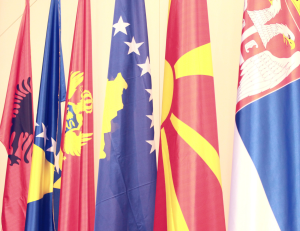
 Staff representation organisations have jointly raised serious concerns regarding the modernisation of the EU Delegation network and, more specifically, the Commission’s proposal to dismiss up to 29 Local Agents (LAs) in the Western Balkans. In the Delegations concerned, this represents a very significant share of Local Agents in core functions such as Finance, Contracts and Audit, in several cases approaching half of the workforce in those sections.
In addition, similar restructuring measures have already affected other Delegations, including Turkey. What was initially presented as a technical and organisational efficiency exercise is now unfolding in a way that raises significant questions about transparency, social dialogue, and the protection of staff, prompting a coordinated reaction from staff representatives.
A joint letter [1], signed by the Common Front (Alliance, Generation 2004, USF, and RS-U4U/USHU), has been formally sent to Commissioner Serafin. This coordinated action reflects growing alarm at how the Delegations’ modernisation, initially presented as an efficiency exercise, is now unfolding as a wave of sudden cuts, applied without consultation and without adequate justification.
Unjust Dismissals in Western Balkans Delegations
The ongoing “modernisation” of EU Delegations, agreed between the EEAS and the Commission last May, was introduced as a technical and organisational improvement. But in reality, the process has been launched without social dialogue, transparency, clarity on objectives, or adequate protection for Local Agents.
Despite earlier assurances that modernisation would not lead to layoffs, Delegations in Western Balkans are now facing collective dismissals at unprecedented levels. In some cases, up to 65% of their Local Agents in Finance, Contracts and Audit Sections are affected. These are core functions essential for continuity, legality, and sound financial management. Among those impacted are vulnerable workers, women in their 50s, colleagues close to retirement, and even an elected staff representative.
The Local Staff Committee Outside the Union (CLPHU), representing Local Agents, was never consulted, despite the fact that Local Agents are the first group to be directly impacted by modernisation. Decisions were taken before any meaningful dialogue took place, creating fear, legal uncertainty and serious operational risks for Delegations.
While the Western Balkans are currently the most visible case of collective dismissals, they are not the only Delegations affected by the ongoing modernisation exercise.
Similar restructuring measures have already taken place in other Delegations, including Turkey, where Local Agents have also been laid off under the same rationale. This confirms that the Western Balkans should not be seen as an isolated situation, but rather as the first region where modernisation is being applied on a broader and more systematic scale. What is happening now.
A broader context that cannot be ignored
The Western Balkans therefore represent a test phase. What is happening now risks setting a precedent for future restructurings across the entire EU Delegation network. The modernisation exercise that will eventually cover the entire network of 145 Delegations, over 3,500 Commission staff, several thousand Local Agents, many of whom are essential to institutional memory, continuity and local expertise.
In the Delegations concerned, the dismissals affect a very significant proportion of Local Agents in core functions such as Finance, Contracts and Audit. In several cases, this represents close to half of the Local Agent workforce in those sections, making the impact structural rather than marginal.
What is happening now sets the precedent. If dismissals can be carried out without dialogue, without justification, and without a social plan, then the same approach could be replicated across Delegations worldwide as the modernisation continues.
Staff organisations demand immediate action
The joint letter stresses that modernisation cannot be used to bypass the Commission’s obligations. Restructuring decisions must be properly justified, transparent and precede by genuine efforts to explore redeployment before any dismissal. Forced redundancies should be avoided and the provision of dignified voluntary departure options.
In practice, redeployment possibilities for Local Agents are often very limited. Local Agents are recruited for Delegation-specific posts, under local labour law and usually cannot be reassigned to other Delegations or services. This makes early consultation, careful planning, and appropriate social measures all the more essential when restructuring is envisaged.
Given the urgency, staff organisations therefore call for the suspension of ongoing dismissals until the modernisation process is aligned with EU rules and meaningful social dialogue takes place. They also request the immediate involvement of staff representatives before decisions are taken, and the establishment of a fair and transparent social plan that recognises the contribution of long-serving Local Agents, many of whom are essential to Delegation continuity.
Possible next steps if the Commission refuses to act
Staff representatives remain committed to dialogue. At the same time, they are preparing further steps should the administration maintain its current course during this first wave of modernisation.
Legal support for affected colleagues
The signatory organisations are ready to support affected Local Agents by facilitating access to local legal advice where appropriate, coordinating a common legal approach among staff organisations, and defending the rights of Local Agents in cases of unjustified dismissal. Further details are set out in the joint letter.
Examples of coordinated actions
If dismissals continue without dialogue or a social plan, staff representatives may consider a limited number of coordinated actions across Delegations. These could include, for example, targeted legal action in support of affected colleagues, or carefully framed visibility measures drawing attention to the scale and impact of the dismissals.
Examples of coordinated actions
If dismissals continue without dialogue or a social plan, staff representatives may consider a limited number of coordinated actions across Delegations. These could include, for example, targeted legal action in support of affected colleagues, or carefully framed visibility measures drawing attention to the scale and impact of the dismissals.
By way of illustration, in some Western Balkans Delegations, dismissals affect close to half of Local Agents in Finance and Contracts sections, with a disproportionate impact on women in their 50s, colleagues close to retirement, and elected staff representatives. The Local Staff Committee Outside the Union was not consulted.
These examples are indicative. The full rationale and concerns are described in the joint letter sent to the administration.