 Psychological safety – a dream that can become reality at the European Commission?
Psychological safety at work is the shared belief that a work team environment is safe for showing up authentically as individuals, and for interpersonal risk-taking. It is a precondition for honest and authentic relationships because there is no interpersonal fear present. In a psychologically safe workplace, employees know and trust that they will not be humiliated, picked on, punished, marginalized or harassed for speaking truth to power, asking questions, expressing concerns, or admitting and learning from mistakes.
Coined originally by Harvard Business School professor Amy Edmondson in 1999, the concept of psychological safety acts as the foundation for high-performing teams, determining how effectively an organisation handles complexity, detects errors, and innovates.
Psychological Safety transforms both employee well-being and organizational outcomes
When employees do not calculate the personal risk of speaking up, they share unconventional ideas and diverse perspectives, tapping into the collective brainpower of the team that drives innovation and agility. In low-safety environments, failures are hidden to avoid blame, while fear and scapegoating are predominant. When safety is high, teams openly discuss errors, turning systemic issues into opportunities for continuous learning, in an open and transparent culture of growth based on self-evaluation and self-improvement. Toxic work environments lacking trust are a massive driver of turnover, while places with a high level of psychological safety have higher employee retention.
Psychological safety also directly intersects with physical safety because when employees feel safe to report, operational failures can be prevented. Additionally, employees who feel safe asking for help or discussing work-related stress do not experience burnout or the isolation that typically fuels overstrain, chronic anxiety, and depression. Creating a workplace culture where individuals feel safe to express their ideas, concerns, and perspectives is therefore essential for driving collaboration, innovation, creative problem-solving and employee well-being.
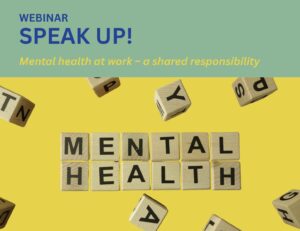
In the framework of Mental health at work – a shared responsibility, Generation 2004 hosts a webinar in which focus is placed on the need to recognise the emotions that are at play in fostering psychological safety for building healthy speak-up environments.
On Friday 27 November, at 12.00, psychologist Pamela Fitzgerald, from the European Central Bank, invites you to engage your empathy, explore emotional expressions, and trust-building strategies to learn how to use your emotions to create safe spaces in which people can feel respected and encouraged to share their thoughts and ideas. The webinar will unpack the dynamics of emotional safety and provide actionable insights for cultivating open communication while minimizing fear and barriers to self-expression. In this webinar, participants will:
- Discover the link between emotions and psychological safety in workplace interactions.
- Learn strategies to manage emotional responses to build trust within teams.
- Explore practical techniques to encourage speaking up and address fears of vulnerability or judgment.
This webinar gives insights on how to improve the dynamics within a team and foster more inclusivity, equipping participants with tools to create psychologically safe environments for themselves and others.
More about the speaker: Pamela Fitzgerald has 28 years counselling experience in Ireland, UK, and Germany; she is a fully accredited counselling psychologist; she has 14 years of experience as a Healthy Leading adviser to managers and team leads in Germany, Ireland and the UK. Specialised in Cognitive Behavioural Therapy, Solution-focused therapy, and Person-Centred approaches, in addition to many years of continuing studies in the various fields of counselling and psychotherapy, she is currently part of the psychosocial team at the European Central Bank.
