 Demonstration in front of the EC Representation, issue with the temperature in the office, accessibility for the people with reduced mobility… These are just few of the many, which briefly describe the health and safety of the working environment of the staff outside of Brussels. This was the subject of the Local Staff Committee Brussels (LSC) plenary session of 11 June 2019 which hosted: Continue reading DG COMM presents Health and safety in the EC Representations at the LSC Brussels
z Newsletter article
External health insurance as a supplement to JSIS
 *Update 15.12.2022: ‘We also advise all JSIS members to opt for private complementary insurance to supplement the JSIS reimbursement in the event of major medical expenses (hospitalization, etc.).’ (JSIS, Practical information).* With this article, we start a series of short articles about our health insurance system and the existing possibilities for supplementary health insurance. We do not recommend any specific insurance and, after reading the articles, you might conclude that you do not need anything more than the standard Joint Sickness Insurance Scheme (JSIS) coverage. However, we want to enable you to make an informed decision. Continue reading External health insurance as a supplement to JSIS
Reimbursement of speech therapy or psychologists – a long lasting battle
 It goes without saying that if one needs a speech therapist or a psychologist a native speaker would be preferable. However, not all of them are registered in the place of employment (Belgium, Luxembourg etc.). Until recently, it has been a great issue for many colleagues to get those services reimbursed from the Joint Sickness Insurance Scheme (JSIS) if the service provider would issue foreign invoices indicating the place of service the place of employment or who would not be registered in the place of employment. Continue reading Reimbursement of speech therapy or psychologists – a long lasting battle
Medical coverage for disabled staff
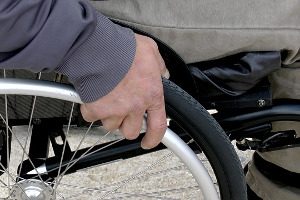 EU staff members and their families are covered by a sickness insurance scheme, known as the Joint Sickness Insurance Scheme (‘JSIS’). In October 2015, following a review conducted under the UN Convention on the Rights of Persons with Disabilities (‘UNCRPD’), the UN Committee recommended that the European Union should revise the JSIS so as to comprehensively cover disability-related health needs in a manner compliant with the Convention.
This inquiry focused primarily on the criteria used by the JSIS for the recognition of “serious illnesses” in relation to disabilities. This issue has important implications for persons with disabilities since medical costs are fully reimbursed only if the illness being treated is classified as “serious”. Continue reading Medical coverage for disabled staff
Sign the EU staff petition to new EU leaders on the climate and ecological emergency!

Generation 2004 supports EUstaff4climate, a bottom-up initiative set up by colleagues from different EU institutions who are seriously concerned about the climate and ecological emergency. Many of our members are involved.
On the eve of a new European Commission, a new Presidency of the European Council and a new European Parliament, EUstaff4climate is launching a petition to ask our future leaders to do all in their power to act on the unprecedented challenge of the planetary emergency we are facing. Continue reading Sign the EU staff petition to new EU leaders on the climate and ecological emergency!
Generation 2004 has a new elected board and chair
 Dear colleagues,
It is my great pleasure to announce that following the election of a new board for Generation 2004, Łukasz Wardyn has been elected chair of the organisation and Eva Lieber vice-chair. The other members of the new board are: Mathieu Fichter, Ibolya Mile, Mira Nesheva, Lia Potec, Ondra Pravda, Fabrício Santos and Claus Schultze. I wish the new board and its new chair/vice-chair all the best for their mandate. Continue reading Generation 2004 has a new elected board and chair
Meeting with Commissioner Oettinger
 On 30 April, Guenther OETTINGER, Commissioner for Budget & Human Resources, invited trade unions and staff representatives to discuss some very hot topics:
- Future reform of the staff regulations;
- impact of Brexit on the 2019 and 2020 budgets;
- MFF negotiations;
- results of the Staff (lack-of-) Satisfaction Survey; and,
- geographical unbalance in recruitment.
Generation 2004’s Contract Agents’ NEW initiative to get rid of inequality in the EU Workplace
 Having in mind the current wave of Euroscepticism, at Generation 2004 we believe it is time to defend the ‘European project’ and a common political agreement that fosters equal treatment between all staff categories. On the 4th of April 2019 Generation 2004 took the initiative to call for an “inter-syndical” meeting with all trade unions and staff organisations in order to discuss the situation of post-2004 staff in the EC. Generation 2004 not only organised this “inter-syndical” meeting, but made a point of being represented by several elected Contract Agents. Continue reading Generation 2004’s Contract Agents’ NEW initiative to get rid of inequality in the EU Workplace
DG BUDG: the return of the collaborative workspace fad
 Colleagues at DG BUDG are the latest victims of yet another Commission fait-accompli collaborative workspace project.
The administration arguments for the project are the usual promotion of communication between colleagues and enhancing collaboration and teamwork in the services. However, if on one side some jobs may benefit from such type of workspace, forcing it down the throats of everyone and without providing a strong rationale, makes us believe that this is just another cost reduction exercise to be pushed on staff at any cost and under no matter which pretext. Continue reading DG BUDG: the return of the collaborative workspace fad
Reimbursement scheme for public transport expenses in Commission Representations
 In the framework of the position of the Brussels Local Staff Committee (LSC) approved in March 2018 regarding the future mobility in the Brussels-Capital region, based on a request by Generation 2004, a separate chapter dedicated to EC Representations was added. Staff in the Commission Representations falls under the competence of the LSC, thus the Commission should assure equal treatment of colleagues regardless of their place of work. In many Representations parking spaces are very limited, therefore, the LSC called upon the inclusion of the Representation colleagues into the reimbursement scheme for the public transport cost to come to work and to provide all Representations with service bikes. Continue reading Reimbursement scheme for public transport expenses in Commission Representations
