 Welcome to the third spring edition of our Newsletter!
This edition comes at a pivotal moment for the future of the Commission, as discussions on the Large-Scale Review (LSR) begin to take shape. We cover key takeaways from our meeting with Catherine Day and what it means for the future of staff. We also examine the growing pressure on both internal and external competitions – highlighting delays, administrative burdens and capacity challenges that raise important questions about the system’s reliability and fairness – while taking a closer look at the newly published AD7 internal competition as a long-awaited step forward. We also address the the increasing cost of living and working faced by EU staff and the dismissal of local agents in delegations, raising serious concerns about transparency, social dialogue, and the human impact of these decisions.
You will find an article on the situation in the European Schools, where administrative choices are creating inefficiencies and frustration for parents and teachers alike.
Have a look at the two articles written in collaboration with two of our members – a powerful testimony that further illustrates the human cost of rigid procedures, and a concerning PMO case on educational allowances, highlighting issues of transparency, fairness, and the real impact that administrative shortcomings can have on colleagues and their families.
In addition, we take a look at the grades and steps system for Contract Agents, and examine challenges related to the new mobility policy and its implementation in practice.
Don’t miss today’s conference with Yasemos Europeos on the AD7 internal competition.
Looking ahead, please find available the self-study packages for the EPSO AD7 competition for Data management and data knowledge. A study group 5 as well as self-study modules for the EPSO AD5 Generalists/Graduates competition on the Reasoning tests, the MCQ on EU knowledge, the EUFTE and the digital skills test are also offered in collaboration with Yasemos Europeos. Finally, you can watch the recording of our Q&A session on the EPSO AD5 competition for Generalists/Graduates.
That’s all for now!
Enjoy the reading and get in touch if you believe we can help!

 Hereby, we would like to thank all voters who supported Generation 2004 in the elections to the LSC Petten, which took place 19-26 March 2026.
 Recent developments in both internal and external competitions highlight growing pressure on the system and raise important questions about its
  The publication of the internal AD7 competition is more than just another call for applications. For many colleagues, it represents something much bigger: a
  Generation 2004 is frequently approached by colleagues seeking advice on how to advance in grading. This article aims at clarifying what one can expect (or not) in that respect during their engagement in the institution, but also upon recruitment or contract change.
  *Update 21.04.2026: you can find here the
 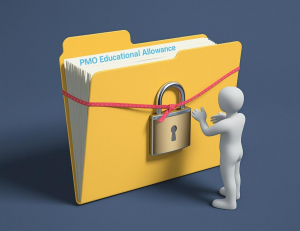 Are you not getting all the necessary
  Generation 2004, in collaboration with
  Generation 2004, in collaboration with